Search Results
618 results found with an empty search
- SOULFUL BITES
Words By Te Huihui o Matariki Chi Huy Tran (he/him) Vietnam, Tibet-China, Tāranaki Tūturu, Te iwi o Maruwharanui, Ngāti Maniapoto “Ăn thêm đi con” is a phrase I hear from my mum at every meal—breakfast, lunch, and dinner. It means: “Have some more food, son.” Her gentle reminder reflects the deep-rooted Vietnamese tradition of sharing love through food. My mum grew up during the postwar era after the Vietnam War ended in 1975—a time when cultural identity was often sidelined in favour of economic recovery. It might seem extreme to sacrifice cultural heritage for economic revival, but there was little choice. Vietnam experienced significant cultural losses, including the destruction of historical sites, the disappearance of traditional practices, and damage to cultural artefacts. The conflict had a profound impact on the country's cultural heritage, leading to the loss of customs, art forms, and historical records. Yet, amidst all this, our remarkable cuisine survived, becoming a beacon of our enduring culture. Despite her Vietnamese, Chinese, and Māori heritage, my mum never had the chance to fully embrace our diverse cultures. Her life was defined by the responsibility of being a good daughter and fulfilling her father’s wish for a normal life with enough food for his eight children. My grandma passed away when my mum was only ten, leaving my grandpa to raise all his children during one of Vietnam's darkest times. This period of hardship mirrors how my mum cherishes our family meals, ensuring that the flavours and traditions of our heritage are preserved, and that I always have more than enough to eat. Our meals were simple, yet rich in flavour and history. Children loved Bánh mì chấm sữa, bread dipped in condensed milk—a sweet delight. Daily dishes included Rau muống xào tỏi, stir-fried garlic water spinach, and Cá kho tộ, a savoury braised fish. Boiled vegetables, grilled aquatic fare, and steaming bowls of rice with fish sauce completed our table. Nature provided abundantly, our task was combining ingredients into delights. Despite being the only university attendee in the family Mum worked tirelessly, working multiple jobs and running a small Chè business with friends, selling traditional sweet fruit soup. Her dedication and perseverance inspire, highlighting the profound ties linking family, culture, and cuisine on top of the challenges she faced. My father was also a skilled cook during his days in the Navy, navigating the seas. His upbringing was somewhat easier than my mother's, yet they were both born in pre-war Vietnam, and he also grew up with eight siblings. Consequently, they both deeply understood the significance of every meal. Despite limited resources, each gathering around the table became a cherished occasion for him, filled with happiness. As my father matured, he honed his culinary skills, faithfully following the traditional methods of our ancestors. He expertly utilised natural ingredients, skillfully wielding the wok to create every family meal I grew up enjoying. I was born into an era where hunger was never a concern growing up. While I enjoyed cuisines from around the world, Vietnamese food held a special place in my heart. It felt like home. From an early age, I learned to value food, never wasting a morsel, and cherishing every meal shared with family. This appreciation stemmed from understanding my parents' experiences: my mother faced scarcity in her youth, and my father navigated a turbulent era, often separated from family meals due to war and conflict. As I grew older family gatherings became less frequent and, eventually, I moved to Aotearoa to reconnect with my Māori heritage. Meanwhile, my parents remained in Vietnam, where their Vietnamese identity, language, and cuisine remained a cornerstone of their lives. For Vietnamese, the saying "you are what you eat" holds profound truth. Renowned for resilience, our heritage is marked by centuries of overcoming foreign domination, internal conflicts, and economic challenges. Our strong familial bonds and cultural values of diligence and adaptability have anchored our resilience, preserving our national identity through turbulent times. This enduring spirit continues to shape Vietnam's trajectory, and defines the strength of its people today. Vietnamese cuisine not only symbolises our rich history but also our cultural resilience, shaped by a civilisation spanning 5000 years, and culinary traditions dating back 2000. Despite diverse influences from colonisation, iconic dishes like Bánh chưng and Bánh giầy stay as symbols of our ancient heritage for all national celebrations. These dishes embody cultural continuity, passed down through generations, linking us to our past and reinforcing our cultural strength. Even after residing in Aotearoa for some time, my Vietnamese identity remains unchanged. Our cuisine represents more than just food, it encapsulates our cultural identity, traditions, and the essence of who we are. Each dish carries stories of family gatherings connecting me deeply to my roots. In a world that often emphasises assimilation, Vietnamese cuisine stands proudly as a symbol of our uniqueness. As I enjoy dishes like phở or bánh mi, I celebrate the flavours and the rich tapestry of Vietnamese culture they represent. Being Vietnamese isn't just about birthplace. It's about an enduring national spirit that shapes who I am today. I was born Vietnamese, and I’ll die Vietnamese. Chur
- Crushing
Words by Jemma Richardson I see him at the checkout, adorned in a khaki apron. Under the harsh fluorescent lights he waits for me, like Heathcliff on the moors. My heart beats in time with the barcode scanner. It’s the way his tawny arms move the produce. It’s his broad shoulders and wide, lopsided smile. It’s The Hair. Caramel-coloured, overgrown, falling into his eyes. The Hair that could launch a thousand ships. I bet he’s into astrology and homeopathy. I bet he sleeps with women who wear a lot of hemp and own too many houseplants. (I bet those women have also developed a Pavlovian response to the beeping sounds of checkouts.) I bet his bedding is organic cotton. I bet he plays guitar badly, but endearingly. I bet instead of joining a gym, he stays in shape by going on long nature walks. I bet he stops to feed birds from a pool of seeds in his hands. I bet he gets the seeds at a discount from the health food store. Whitney belts out I Will Always Love You which feels a bit on the nose, but that song is always playing in supermarkets, so I try not to read too much into it. I watch as he packs my groceries, reading the side of my ‘I Stand With Ukraine’ tote bag. We start chatting. We start connecting. We both love oat milk and democracy!? It’s kismet! It’s written in the stars! He hands me my receipt and oh! I think of a cartoon dog nudging a meatball with its nose. I hear the romantic swells of an accordion, like we’re in Pa-ree , being serenaded by a Frenchman in a striped shirt. I look at the shelf of herbal tonics, and what’s this? They’re all wearing berets! The essential oils next to them are are smoking cigarettes! The avocados are holding roses between their teeth! And the celery, well, the celery is swooning at the whole charming scene… * You have a crush, my boyfriend tells me, you have a crush on the guy at the health food store. It’s his favourite story to tell friends when we go out to dinner. Liv has a little thing for him , he’ll say, topping up the wine glasses. It’s not a thing, I’ll say, mock-offended, I’m in love. She gets very giggly, he’ll say , her face goes red as a tomato – an organic tomato, of course. Our weekly shop starts to become more vegan. Doesn’t it just feel better for your body? my crush asks. Oh god yes, I say. He tells me which of my items can go in my non-existent compost. I add a pot of organic, cruelty-free sunblock at the last minute, saying I do n’t need any more freckles. I like freckles , says my crush, running a hand through The Hair. I think about it all the way home. When I stop at an intersection, a man raps on my window. You left some shopping , he says, pointing to the roof of the car. I catch strep throat over Easter, and I can’t get a doctors appointment for three days. I look online for natural remedies to help me get by. I gargle ginger-infused water. I chop a garlic clove in half and wedge it in my ear. That’s how my boyfriend finds me. Ginger-breathed and garlic-eared, entombed in our sweat-soaked bedding. He feels my clammy forehead, checks my temperature. He brings me water and Nurofen. * Our usual supermarket was out of leeks. I was making my boyfriend leek soup, which I don’t even like, but he’d been having a tough time at work. I tried three different supermarkets before I remembered the health food store, a last ditch attempt. The store smelled like incense. The other shoppers were all Pākehā women with oversized beaded jewellery and dreads. The vegetables were pale and misshapen. I reached for a leek and the whole pile came tumbling down, drumming against the floor. A man appeared at my side. He smelled like a freshly sharpened pencil. Do you need a hand, Miss? That’s how I met the health store worker. I’m watching cartoons with my niece and nephew. When I was their age, I thought the biggest challenges in my life would be avoiding falling anvils, avoiding quicksand, avoiding dynamite sticks. Not arguing about chores and errands, arguing about late bill payments, arguing about that job opportunity he won’t take. I thought relationships would be saying things like I love you and Darling! and I’m yours. Not you’re selfish and lower your voice the neighbours will hear you and what’s even the point in this anymore? and fuck you. My flatmate had been in a play at BATS. She’d invited me to the afterparty where I drank too much, danced terribly, and spilled half my drink down the back of a man’s shirt. He was nice about it. He wore glasses. He was chatty. I take it you’re one of the actors in the play, I said at one point. How’d you guess? he said. Because you’re tall, handsome and extroverted, I said, making him blush. Well, he said, you’re right about two of those things. Yes, I said, leaning closer, on second thought, you’re not actually that tall. That’s how I met my boyfriend. * My boyfriend rushes to me when he hears the front door slam. Did you remember to get onions? he asks, scanning me for grocery bags. He cut The Hair! I say, dazed, slightly irate. He puts a placating hand on my shoulder. Nevermind about the onions, he says, I’ll heat us up some leftovers. After a second helping of microwave butter chicken, we stand together at the kitchen sink, me washing up, him drying. He touches my hips absentmindedly as he moves around me, putting things away. Afterwards, we sit on the sofa and watch our show. We share the last beer in the fridge, passing it between us, taking sips. I stroke his hair, tell him he’s going grey. So are you, he teases, kissing my shoulder. I lean into him, listening to his heartbeat, marvelling at its rhythm, perfectly in sync with my own.
- A Night At San Fran: Feshh, Macho Macho, Dale Kerrigan, and Ringlets
Words by Jia Sharma (she/her) Last Friday’s show at San Fran had an unbelievably exciting lineup. Kicking off the night were local bands Feshh and Macho Macho, and out-of-towners Dale Kerrigan and Ringlets taking the headlining slot. This was undoubtedly a very special show to be at. The night was organised by Goosegarden, an up-and-coming promotion and recording label. This was their biggest show yet. What started as a casual conversation between friends has blossomed into a promising music collective. Logan, who is also the guitarist for Macho Macho, spoke on behalf of Goosegarden and described the shows lineup as a true representation of the collective. The evening was kicked off by Feshh, who also performed at the previous week’s Eyegum Wednesday. Describing their sound as noise pop with shoegaze influences, Feshh delivered an ethereal performance that seamlessly blended loud drums and guitars into an unexpected harmony. The stand out of their set was when they played “Acetone”, an obvious crowd favourite that had the room singing along. Feshh has promised exciting things coming our way. The band is taking a break to focus on recording, and is set to have a single on the way before releasing a full EP. Next up was Macho Macho, a band I’ve been trying to see for a long time. The band has transitioned from an indie, Mac DeMarco-inspired sound to a more rock-oriented style that resonated perfectly with me. The guitarist, Logan, explained that the band’s music changes as the city does, and their new unchained, ‘cowboy post-punk’ sound reflects this evolution. What really stood out to me while watching their set was the undeniable chemistry the band members had, staying in sync without having to physically interact with one another. It added a new level of immersion to their set, amplifying the already captivating music they were playing. Following Macho Macho, Dunedin's Dale Kerrigan took the stage. This was their fourth time playing in Wellington, and after this show, I can’t wait for them to come back. Their post-hard rock sound was coupled with captivating vocals and lyrics, and I found myself eagerly listening to the lyrics themselves. Dale Kerrigan also promised new music to be released and provided a taste of some new songs at this show. The band is set to start recording shortly for an album, which I am now beyond excited for. If I ever find myself in Dunedin, I know I’ll definitely be searching for one of their gigs. Ending the night was Auckland band, Ringlets. While this was their third time playing at San Fran, it was their first time taking the headlining slot. I loved their crunchy guitar sound that contrasted with more soothing and melodic parts of their songs. The drums, in particular, had a beat that made it impossible not to tap your foot along. Guitarist and vocalist Laszlo described their gigs in Wellington as feeling like mini holidays, and after this show, I hope these holidays become much more frequent. The show was a series of bangers from start to finish, deepening my appreciation for Wellington's talented bands and introducing me to incredible acts from other cities. I’m so excited to see what Goosegarden does next. They’ve got some great acts lined up for their next show at San Fran on the 25th, so be sure to check them out.
- PARK RD: The Novel
Words by Jia Sharma PARK RD recently released their first full album, The Novel , marking a new era for the Auckland-based band. Originally starting as a high school project, the band officially formed in 2018 and has been evolving ever since. I had the pleasure of writing about their single ‘ Every Night ’ as a precursor to the album, which heightened my anticipation for The Novel . The album promised a departure from the band’s previous music, embracing more melancholic and vulnerable themes. It’s safe to say that The Novel signifies a clear transition and maturation, capturing the turbulent emotions of youth, love, and growing up. The album starts off strong, with the opening tracks ‘ June’ , ‘ Secrets ’, and ‘ Call Me Up ’ being standout’s of mine. Their energetic guitar riffs and harmonies are consistently compelling, making these tracks linger in your mind. I’ve found that PARK RD always delivers killer guitar tracks, a hallmark of their sound. The single ‘ Every Night’ concludes the album with a bang, following more introspective songs like ‘ Asleep/Awake ’, written by lead singer Tom during the Auckland floods last year. This track deviates from their usual pop/rock sound, offering deeper, more conceptual lyrics. While I enjoy a good upbeat song that doesn't require much thought to enjoy, ‘ Asleep/Awake ’ pleasantly surprised me as a thoughtful mid-point in an album that begins and ends with high-energy tracks. Leo, the guitarist, described The Novel as a platform for more songs like this, which wouldn't have fit on a smaller EP. I'm excited to see PARK RD continue to evolve on this path from their typical mainstream pop-party tracks. The album's production is impressive, with the band working alongside a producer and also handling some production duties themselves. The creation process spanned two years, with several intense months in the studio, and the effort is evident in the final product. The Novel also marks PARK RD's first physical release, available on vinyl at record stores across New Zealand. The band isn't slowing down, with an Australia tour lined up later this year and plans to begin recording their second album upon returning to New Zealand. Currently in the midst of their New Zealand tour, PARK RD has received great reception from crowds in Dunedin and Christchurch. They are set to perform in Wellington at Meow this Saturday, with support from local acts Sure Boy and First Reserve. The Novel is a significant milestone for PARK RD, showcasing their growth and versatility as a band. With its blend of upbeat anthems and introspective ballads, the album offers something for every listener. After their successful show at Homegrown earlier this year, this gig promises to be a must-see event.
- The Hidden Costs of Sporting Success
CW: Eating Disorders, Sexual Assault, Pedophilia Words by Ash Buick (they/them) The Olympics often stir a sense of national pride as we ‘take down the big guys’ on the international stage. Many eagerly track the medal tables, hoping to see their country climb the leaderboard. But how often do we consider the human cost behind those medals? The physical and mental toll that athletes have to bear, often without acknowledgement? Each new generation faces pressure to outperform the last, and with social media’s reach, any misstep is amplified.The performance of current athletes shapes the future of their sport, creating a relentless cycle of pressure and expectation. In 2016, for the first time since 1968, the average age of female Olympic gymnasts was above 20. Between 1992 to 2004, the women’s all-around champions were children, the youngest just 15. This contrasts sharply with the men’s category, where every all-around champion has been an adult. In women’s gymnastics, there’s a long-held belief that puberty is the enemy. Young athletes are taught to fear the day their careers might end due to physical changes. This fear drives them to train intensely, aspiring to reach Olympic levels as quickly as possible so they can stay at the top for longer. However, recent cycles show that adult women can still excel as champions. Despite this, young gymnasts are often subjected to strict diets that fail to meet their nutritional needs, fostering a culture where eating disorders are prevalent. Numerous studies indicate that such extreme training can delay physical development, including puberty. These children sacrifice a normal childhood to embody their nation's vicarious hopes and dreams. The 2020 documentary Athlete A exposes the abuse within USA Gymnastics, where athletes were isolated from their families on ‘camps’ and subjected to sexual assault by Larry Nassar, a convicted pedophile, under the guise of ‘medical treatment’. Athletes like Maggie Nichols, who spoke out, faced retaliation, such as being dropped from the 2016 USA Olympic team. While figure skating is a Winter Olympic sport, it shares similar issues with women’s gymnastics, particularly in Russia. The culture promotes eating disorders and lowers the ages of competitors. Russian coach Eteri Tutberidze is idolised for training the first ever female athlete to land a quad-axel in competition, yet many of her athletes end up retiring with serious injuries before the age of 18. Allegations suggest that she pushes her athletes to dehydrate and starve themselves to meet unrealistic weight targets, urging them to return to training immediately after injuries instead of allowing proper healing. There’s always a line of young girls ready to replace those that retire, as they see her tough methods as a requirement to succeed. Kamila Valieva’s disqualification scandal in the 2022 winter Olympics highlighted the problems with Tutberidze’s methods. She was only 15 when she was banned from the Winter Olympics for doping. Even when Valieva was allowed to compete, the impact on her mental health hindered her performance. This case underscored the vulnerability of children in elite sports, especially when the adults meant to protect them have their own agendas. In response, the minimum age for figure skaters was raised to 17, though it remains to be seen if this change will lead to a more sustainable future for the sport. High-performance sport organisations often fail to prioritise athlete welfare, as funding is tied to competitive success. As long as athletes are ‘successful enough’, there’s little incentive for organisational reform. Management are incentivised to brush-off allegations against individuals perceived as crucial to a team’s success. For smaller sports this funding model creates a catch-22: development is stifled without funding, but funding is unattainable without success. Closer to home, High Performance Sport NZ (HPSNZ) has faced criticism for its treatment of athletes. In 2021 HPSNZ announced a new strategy focusing on athlete wellbeing, and revised funding for individual sports. This reform followed the tragic death of Olympic track cyclist Olivia Podmore, highlighting systemic issues within Cycling NZ, including a lack of diversity, and a toxic culture that discouraged athletes from voicing concerns. The report revealed that many cyclists experienced trauma in the lead-up to, and during, the 2016 Olympics. In Aotearoa we often elevate athletes and coaches, but our support wanes when they stop winning. We completely disregard the type of skills and talents that a person needs to work in a high-performance sporting environment, and must recognise that progress is not linear. Significant systemic changes take time to yield results. Honestly, as a nation, we’ve gotten so accustomed to winning at international events that we as a country feel entitled to gold medals and world cup wins. We must now acknowledge the human cost.
- Ngāi Tauira: Save Teahupo’o. Protect the Reef!
TE WAIKAMIHI LAMBERT | NGĀTI AWA, TŪHOE & NGĀPUHI. As the 2024 Olympic Games draw closer, a wave of concern is rising from the residents of Tahiti. The world-renowned surfing venue at Teahupo’o, chosen for its formidable waves, is now at the center of an environmental dispute. Local communities argue that a new judging tower to be built on Teahupo’o reef is going to ruin Tahiti’s delicate coral reefs. This could potentially devastate the marine ecosystem, the local economy and the cultural connection that Māohi people have to that reef. Teahupo’o, a small town in Tahiti, will host the Olympic surfing event, bringing an influx of spectators, officials, and security. The construction of a new aluminum judging tower, replacing an existing wooden one, has been particularly controversial. Local Māohi surfers and fishermen, through the Vai Ara o Teahupo’o Association, have led protests and social media campaigns against the tower's construction. A petition against the project has garnered over 195,000 signatures. The Polynesian Government, Paris 2024, and the Haut-Commissariat have proposed a new plan for the judging tower. Instead, a smaller, lighter aluminum tower will be constructed. This revised plan includes reducing the surface area by 25% and reducing the weight by 5 tons. However, this still involves drilling foundation rods into the reef, although not as deep as initially planned. The committee has assured locals that the tower will be built in an area with fewer corals and that existing corals will be relocated to promote regrowth. However, Titouan Bernicot of Coral Gardeners argues that coral replanting is a challenging process and that the reef will suffer long-term damage. Despite the committee's adjustments, activists remain unsatisfied, claiming the reef will still be adversely affected. Concerns also extend to the transportation barges used for construction, which have been seen damaging the reef despite assurances of using a smaller, less harmful barge. Videos have surfaced showing significant coral damage caused by the barge, contradicting the committee's claims. Activists advocate for the continued use of the existing wooden tower, highlighting its successful use in past international competitions. They argue that the new construction could disrupt the delicate marine ecosystem, impacting local biodiversity and the fishing economy. There is also the risk of ciguatera, a neurotoxin produced by microalgae that grows on dead coral. This toxin is harmless to fish but can cause severe illness in humans who consume contaminated seafood. Increased levels of ciguatera could render local fish inedible, further threatening the livelihoods of Teahupo’o’s local residents. Despite the controversy, Paris 2024 has a claimed commitment to sustainability initiatives, aiming to reduce the carbon footprint of the Games by 50%, and ensuring 95% of infrastructure is either temporary or already existing. This includes housing athletes on a cruise ship instead of building new facilities. However, critics argue that the judging tower represents greenwashing, with construction impacts overlooked. They contend that true environmental conservation would not risk ecosystems and livelihoods for a brief event. The Olympic Committee must honor its sustainability commitments by ensuring the Teahupo’o reef remains undamaged, respecting local wishes and ecological integrity.
- I BELIEVE THAT THE WWE SHOULD BE INCLUDED IN THE OLYMPICS
Announced by Teddy O’Neill (he/xe/it), Ngāpuhi I love sports. I love sports a stupid amount. The only issue I have with sports is that none of them really embrace the true campiness and homoeroticism of what it means to be a group of men running around, slick with sweat, trying to gain triumph over one another. There is, however, one sport which I believe embraces these factors and has them as an intrinsic part of its essence and livelihoods. This is why I believe the WWE should be a sport included in the Olympics: CAMP: There are a few sports which I believe lean into camp, albeit in small doses, and one of those is ice hockey. Ice hockey is like if rugby was angrier and gayer, with its silly little ice skates and angry little fights. The Olympics certainly get further into the campy sports, like fencing, water polo or the newly introduced three-on-three basketball. It’s undeniable that in comparison to sports which dominate our mainstream networks, the Olympics often allow the campier nature of sports to shine through. I still don’t think they’re doing enough. WWE embraces camp in the greatest of ways. Take, for example, wrestler Seth (Freakin’) Rollins. He has been known as both The Messiah and The Visionary, and takes great pride in showing up to all of his matches in the most ridiculous yet amazing outfits his costume designer can come up with. For example, the outfit he wore to Clash at The Castle 2023 paid homage to an outfit from the Elton John biopic. Why did he wear this outfit? Not entirely sure. Definitely camp though. STORYLINES: I like sports that I can get invested in. I’m sure you do too, like when football fans have beef with each other’s teams, their matches are so much more fun to watch. Sure, when you’re watching the Olympics you root for your own country, as you should! But where’s the story? Where’s the drama? WWE has storylines that go back DECADES. We’ve got betrayal, we’ve got love and despair, we’ve got tragedy. Take, for example, the storyline behind The American Nightmare Cody Rhodes and his battle against Roman Reigns, which lasted for literal years. The redemption of a man who had been fired from the WWE, the dismantling of an empire created by Reigns, the rightful winning of a title after a reign which had lasted 1,316 days (which is actually wild). There is no way to describe to you how I reacted at Wrestlemania this year when Cody won. I went feral. I was foaming at the mouth. I want the Olympics to make me, and all of you, feel as joyous as I had in that moment. (And, if that isn’t quite enough, there is actually a Kiwi wrestler. She goes by Dakota Kai, and she is both hilarious and also pretty good, so you can still root for your own country!) ATHLETICISM: It’s often said that the storylines in WWE are scripted and that the fights are fake. The first half of that statement is definitely correct. The second, however? I mean, come on, how athletic do you have to be to get hit with a steel chair multiple times and still get up to continue fighting? IF you’re still sceptical, and I know that this request will probably be a reach for quite a few of our readers, go and watch King of The Ring 2024’s match between Cody Rhodes and Logan Paul. Now, I’m not trying to say that Logan Paul is a good person. However, it’s undeniable that he’s a great wrestler (see: pulling off a frog splash off the top rope onto Rhodes, putting him through an announcement table). Paul still lost, as he should, but some of the moves that those two pulled out in that match were insane and incredibly dangerous. WWE superstars have to train and work so hard to be able to do the work that they do, and honestly? I’m a little sick of people diminishing that. PITCH: I will admit. A WWE title match at the Olympics is a reach. For those that don’t care about the promos and don’t want to hear the superstars yapping at one another, that could be a good time to go and get a snack. This is why I am suggesting that at the Olympics, we have a halftime show where there is a WWE match. I propose a Royal Rumble, in which almost the entire wrestling roster gets put in the ring with the objective to throw all of the others over the top rope, and the last person standing in the ring wins. It’s entertaining, it’s camp, it’s got a story, and for those that aren’t interested? That’s okay! It’s half time! Go get a snack and some water so that you can settle in for the next round of badminton. CONCLUSION: I am not saying that everyone needs to enjoy WWE. I am not saying that all sports need to become WWE. I am simply saying that I believe the WWE would provide great fun and joy for all who watch the Olympics, and also I personally would enjoy it so very very much. I also believe it would hype every other athlete in the vicinity up and then they’d all perform a lot better. Thank you.
- The Girly-Pop-ification of Sport
Served and returned by Kate Seager (she/her) If Luca Guadagnino’s Challengers didn’t make you pine after long summer evenings spent at the local small town tennis club of your childhood, then I can only hope this year’s Olympic Games will. A Euro-summer in Paris while the sport gods of our society jog around the city of light like it’s no big deal—catch me skiving off my parent’s SkyGo for the foreseeable. No matter where you stand on Paris’ bold decision to host the biggest sporting event on the calendar (see: 2023 Rugby World Cup bed bugs debacle, poor infrastructure, and # JeChieDansLaSeineLe23Juin ) I think sport is cool. You should think so too. I’ve played squash since I was eight years old. It’s a sport not many have heard of. Most get into squash through their parents—if you’re lucky to have parents who are prepared to take you to tournaments on the weekend and training during the week, it becomes addictive. However if you don’t, the drop-off is quite significant—particularly in girls. Unlike tennis, squash isn’t the easiest sport to pick up, but maybe that’s because not as many people grow up with it. I watched as my high school peers tried to get into it (yuh), appealing due to the fact that it’s “basically an indoor version of tennis,” but they slowly dwindled away once they realised the ball isn’t as forgiving and squash actually requires a fair amount of running. What didn’t help was that high school is ripe with judgemental teenage girls and puberty (woohoo!). It makes sense that girls preferred to play netball, hockey or football, sports they’ve likely spent their whole lives playing, rather than try a new one. What began as a fairly strong group of girls, eager to learn, quickly became five of us who’d already been playing together for years beforehand. Which is where the girly-pop-ification of sport comes into play. As much as I’d love to gatekeep squash from the girlies who play for the aesthetic, it’s about time more girls played a sport I truly love. Squash New Zealand has been trying to figure this out for as long as I can remember. If we look to see how other sports have retained a large proportion of women in the past, we may find the answer. If there’s one thing I know to be true is that girls love pop culture, which, if used tactically, can make previously unheard of sports trendy. This is possibly the greatest asset for the squash community right now. When Bend It Like Beckham came out in 2002, women’s football wasn’t a professional sport. More than twenty years later, football has become the most popular sport among women in the UK. Last year I found myself infatuated with the Women's FIFA World Cup when I previously had no interest in football. Perhaps it was because Aotearoa was hosting. Perhaps it was Sam Kerr. Perhaps I had just got around to watching Bend It Like Beckham around the same time. More likely, though, was the marketing of the World Cup. By onboarding New Zealand and Australian it-girls BENEE and Mallrat for the FIFA World Cup theme song, football suddenly became iconic as fuck. Not only did it appeal to the girls, gays, and seemingly the entire nation, but I found myself signing up for social football later that year. More recently, Challengers has made tennis sexy again. While the Williams sisters and Naomi Osaka have kept the women's side of tennis engaging over the past few decades, I’ve often found the men’s draws pretty mid. While tennis has remained consistently popular over my lifetime, Challengers has reignited the men’s side of the sport especially. With the tennis season starting to ramp up in the northern hemisphere, I’d be prepared for your Instagram to be flooded with your mates sitting courtside, living their best Euro-summer, with the Challengers soundtrack in the background. Not to mention Formula 1 and the impact Drive To Survive has had on the sport’s popularity among young women (see: Lando Norris). Unfortunately for squash, the girly-pop-ification is a few years off yet. It’s been announced as an official Olympic sport for Los Angeles 2028, a move that’s bound to popularise squash globally. It’s my hope that while the cooler months descend on Aotearoa a few years from now, girls watch squash at the Olympics and feel inspired to take up a new winter sport. Growing up, I spent far too many training sessions being the only girl in the room—the girly-pop-ification of squash can’t come soon enough. If you’re interested in getting ahead of the trend and playing the predicted “it-girl sport of 2028”, Te Herenga Waka has their own squash club. They meet every Wednesday night from 7-9pm at Club Kelburn and you can find them on Instagram ( @vuwsquash ) and Facebook (Victoria University Squash Club). For those who are interested in playing more competitively, Thorndon Club hosts club nights on Thursday and Sunday, and has various Interclub teams for a range of levels.
- Breaking The Ice: A New Era For Women’s Ice Hockey
Words by Ryan Cleland (He/Him) On the 20th April this year 21,105 people gathered at Montreal’s Bell Centre , setting a world record for the largest attendance at a professional women's ice hockey game. This event, titled Duel at the Top, was a regular season matchup between the Toronto and Montreal teams in the Professional Women’s Hockey League (PHWL). The PHWL, launched in January, marks a historic milestone as the first top-level professional hockey league for women. It is also the first professional sports league to use a Collective Bargaining Agreement with the Players Association, ensuring fair salaries and guaranteeing contracts in its early days. Commercially the league has thrived, attracting over 390,000 spectators and reaching more than three million online viewers during its debut season. With Team Minnesota recently claiming the coveted Walter Cup in the postseason, and the PWHL draft just concluded, now is the perfect time to dive into this new sport, and perhaps start supporting a team in what is becoming one of the most significant women’s’ sporting leagues in recent years. PWHL Minnesota Starting with the league champions, Minnesota got off to a fast start at the beginning of the year dominating the other teams They hit a slump, however, after an international break, remaining winless until the playoffs. There they staged a remarkable comeback, achieving a reverse sweep against Toronto and clinching the Walter Cup in a decisive fifth game against Boston. Leading the forward line was Taylor Heise, the #1 draft pick of the inaugural PWHL draft. The 23-year-old rookie shone in the playoffs, earning the Ilana Kloss Playoff MVP with eight points. Another standout was forward Grace Zumwinkle, who led the team in goals (11) and points (19), earning the PWHL Rookie of the Year. In goal, Maddie Rooney and Nicole Hensley provided formidable support, truly shining in the playoffs. The success of Minnesota began and ended with their goaltenders, and it will be exciting to see their progression next year. For newcomers to hockey, Minnesota promises an exciting team to watch as they continue to evolve. PWHL Montréal Montréal had an outstanding inaugural season, earning 13 wins and three overtime wins, finishing 2nd in the league before falling to Boston in a major first-round playoff upset. The team is led by Marie-Philip Poulin, affectionately known as ‘Captain Clutch’. She tied for 2nd in the league with 23 points and led in faceoff draws and wins. A huge figure in both the sport and in the province, she was a finalist for the PWHL’s Forward of the Year and Most Valuable Player awards, and was even named to the first PWHL All-Star team. Montréal boasts a strong defensive line, including stars like Kati Tabin, an ex-PHL Isobel Cup-winner, and Erin Ambrose, the PWHL Defender of the Year, who led in assists with 14, and had 18 points overall. Montréal looks to be a strong contender for the Walter Cup next year, making it a perfect time to hop on the bandwagon of one of the best and most experienced teams out there. PWHL Toronto Toronto had a dominating season, finishing with a 17-7-0 record, the only team without a regular season overtime loss. However, they fell short in the playoffs, losing to Minnesota in games three, four, and five. Toronto’s MVP, without a doubt, is Natalie Spooner, who led the league in goals and won the Billie Jean King MVP Award. Spooner is the face of women's ice hockey worldwide, with her counterpart, 28-year-old forward Sarah Nurse, also a prominent figure, famously appearing on the cover of EA’s NHL23 with NHL Star Trevor Zegras. With a strong foundation and some of the most famous names in women’s ice hockey, Toronto is set to be a formidable force next season. PWHL New York New York, the underdogs of the PWHL, have played a rocky game this season but should not be underestimated. Initially things looked promising, with star players like Ella Shelton, Corinne Schroeder, and Alex Carpenter. However, that unfortunately didn't translate to winning games and getting butts in seats. Consequently, New York ended up in last place with the lowest attendance in the league. However, with the #1 draft pick, they selected generational talent Sarah Fillier, offering hope for a brighter future for the Big Apple. As long as they secure a permanent home, and a place to seat fans, PWHL New York will be an exciting team to watch in the upcoming season, and will hopefully join the large roster of historic New York teams that make the city so infamous for its sports. PWHL Ottawa Ottawa stood out as a market, averaging the highest attendance in the league with enthusiastic fans. Despite this, once the dust had settled, they finished second to last, narrowly missing the playoffs. In the latter half of the season is where Ottawa found their footing, with help from players like Captain Brianne Jenner and Kateřina Mrázová, scoring the second most goals of any PWHL team. However, these goals often came at inopportune moments, Ottawa would win 5-0 shutouts and then falter in two-to-one battles. With a strong fanbase, Ottawa is looking to right their wrongs in the coming preseason. PWHL Boston Boston delivered the biggest surprise in the PWHL. Despite a slow season start and slim playoff chances, they found their stride post-international break, sweeping Montréal in the first round, pushing Minnesota to five games in the finals, and narrowly missing the Walter Cup. With stellar goaltending from US Gold medalist Aerin Frankel and Rookie All-Star Emma Soderberg, Boston boasts the league's best defence. However, they suffered from a lacklustre offence. By picking up star forwards Hannah Bilka and Ilona Markova in the PWHL draft, they hope to fix the team's glaring offence issue whilst remaining a defensive powerhouse. Boston is highly favoured to return to the finals next year, aiming to secure the cup they narrowly missed. With the next season of the PWHL set to begin in about two months, featuring an expanded 32-game season and official team names and logos, it’s an exciting time to get involved. The second season promises to be just as successful as the first, so get ready to support the teams and enjoy some thrilling ice hockey action.
- It's Not Easy Being Green
DARCY LAWREY (HE/HIM) OPINION: In what “may or may not'' be a commentary on our country’s two major parties, party co-leader Chlöe Swarbrick lays out why she chose the Green Party. “I didn’t want to sit down, shut up and wait 10 years to have an opinion, by which point in time I might have conformed so much I didn’t know what my opinion was anymore”. Well Swarbrick is far from short of opinions. Her election as co-leader of the party in March this year will have been of little surprise to anyone paying attention. Regularly appearing on the preferred Prime Minister polls, even before her promotion to co-leader, her political career has been nothing short of impressive. But for Chlöe it’s never been about the position. “You don’t join the greens because you aspire to hold some particular title” she says. In her view, you join the Greens to make real change happen. It is sometimes easy to see the Greens as merely the eco-socialist arm of the Labour party—or at least a regular source of plagiarised policy—but Chlöe asserts that they “already lead the left of politics in this country.” When asked about the party’s future she says that the goal is for the numbers to start reflecting this, “such that we have the critical mass necessary to get radically transformational policies across.” But in their quest for that critical mass the Greens have spent much of 2024 caught up in dealing with scandals, unruly MPs, and tragedy. As a result of a drawn-out investigation into claims of migrant exploitation, MP Darleen Tana has been ousted from the party, forcing the party to consider using the waka-jumping legislation they have been so opposed to. Then, of course, there’s Golriz Ghahraman’s shoplifting scandal, allegations of bullying against Julie-Ann Genter, and the tragic death of MP Fa'anānā Efeso Collins. The stars have not exactly been in the Green’s favour. Swarbrick chalks some of this bad luck up to a combination of the “very peculiar institution” that is Parliament, which she says, “forces people to go at each other’s throats”, and the mass of trauma and stress that is running through the party. It’s clear that being passionate about politics comes with a cost. She has conversations with her colleagues about quitting politics, including about leaving her own position, very regularly—it is a very common conversation to have with people”. “Over the last several years I have had conversations with people from every single political party that is currently represented in our parliament about mental distress” she reveals. She says that finding a solution and improving the support offered to MPs is an “existential question for all political parties.” The need for this existential look in the mirror is one which she says is especially important for the Greens as a result of their strong adherence to shared values. How we do parliamentary politics in New Zealand “is currently not geared to getting the best out of people”. But exploring a solution to this problem is something Swarbrick says she is committed to. Note: the author is a member of the Green Party.
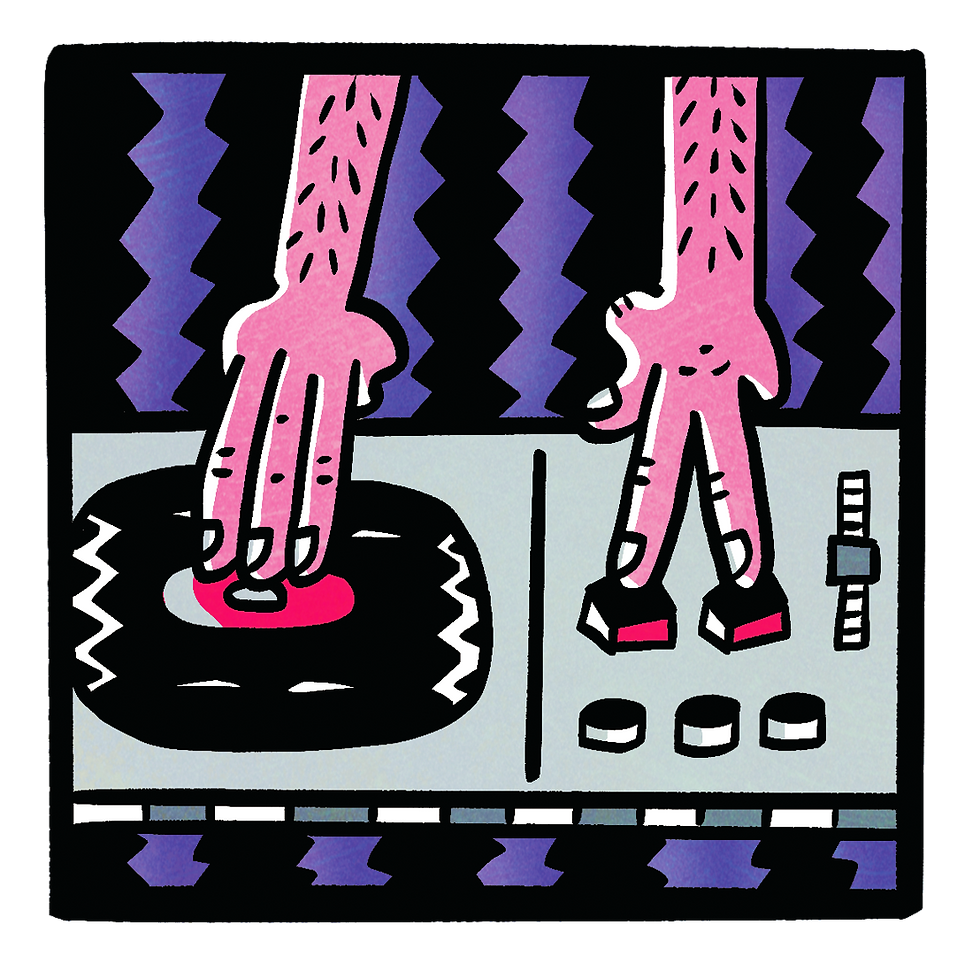
- Groove Garden: April-June
Curated by Xavier Farrow-Francis (any/all) Later that day, the day before, or the day before that Casey MQ Writing this particular review was tough for me because, as I was listening through this record for the hundredth time, I could not stop sobbing. Canadian producer/composer/musician Casey MQ has crafted one of the most intimate, soft-spoken, and purposeful albums I’ve honestly ever heard. Made up primarily of piano, vocals and ambient electronic textures, Later that day… delves into memories: where they go, how they morph over time, and how we interact with them. Casey’s androgynous and delicate vocals cradle poetic and touchingly abstract lyrics, echoed through the wonderfully intricate production. This album is a darling that understands our ever-changing emotions and experiences. I adore it so much, and it will likely remain my favorite record of 2024. Listen if you like : oklou, Joni Mitchell, Studio Ghibli soundtracks Genres : ambient pop, singer-songwriter, alternative R&B Dennis Sega Bodega Take everything I said about Casey MQ’s heavenly album, flip it on its head, descend it to the abyss, and apply it to this one. Sega Bodega’s third full-length questions what happens in our heads when we sleep, taking us through an eclectic musical journey in the process. From trance, to dembow, to folk music, and ambient, the record is cryptic, shadowy, mischievous, haunted. I can’t say I’ve heard another album so sonically ambitious and thematically surreal this year. But despite how chaotic it may sound, there is much that drew me in and felt familiar about Dennis and its obscured psyche. Listen if you like : Arca, Squarepusher, the surrealism of sleep and dreaming Genres : electronic, UK bass, art pop, IDM Here In the Pitch Jessica Pratt Jessica Pratt’s singular brand of folk-pop songs are enigmatic, yet earnest – the kind you listen to, aren’t entirely sure how to spell out, but you know and feel them deeply. Bringing elements of bossa nova and the classic sounds of 60s pop music, Here In the Pitch channels a nostalgia for a time past, but so truly and genuinely lives in that space. Her voice is just so magical and enchanting too, sounding ageless, and so close and far away at once. It’s an incredibly short and sweet listen too (sitting at below 30 mins), so really you’ve got no excuse not to check it out! Listen if you like : Weyes Blood, Nancy Sinatra, Cat Power Genres : singer-songwriter, psychedelic folk, 60s-era sunshine pop BUG Kacy Hill A record all about fulfillment and aspiring for self-happiness, Kacy Hill’s newest album glows with positive change and catharsis. She leans closely into her influences on BUG , calling back to the 90s alternative of Alanis Morissette and Sarah McLachlan, and embracing her affinity for country music. The combo of twangy pedal steels, plucky synth passages, and Kacy’s angelic voice make for a really homely listen. BUG emanates those warm fuzzies you get when you notice how much you’re growing and changing for the better. Listen if you like : Maggie Rogers, The Japanese House, Sheryl Crow Genres : indie pop, soft rock, dream pop Please Don’t Cry Rapsody Rapsody’s fourth studio album comes five years after her last, and it’s clear to see why. Just three tracks in you can tell how much of an emotional outpouring this record is. Please Don’t Cry is intensely personal; an album about the human condition and how much we analyse everything we experience. Rhapsody explores it all: perception, anger, love, grief, injustice, sex, faith. With a fantastic selection of guests and producers, the music holds her stories so tenderly. Please Don’t Cry is one of the most soulful albums I’ve heard this year, and a must-listen for any hip-hop fan. Listen if you like : Lauryn Hill, Erykah Badu, Mos Def Genres : conscious hip-hop, neo-soul, boom bap
- Māori & Pacifika News: Coalition Criticised for Māori Wards Bill, Karakia Clash, Kororāreka Name Restoration Pending
TE HUIHUI TRAN (HE/HIM), TARANAKAI, NGĀTI MARUWHARANUI Racist Coalition Criticised for Māori Wards Bill ActionStation has condemned the coalition government for advancing what they call an "anti-Māori" agenda with the Local Government Amendment Bill. The bill mandates referendums on existing Māori wards, despite overwhelming community support for their establishment. Kassie Hartendorp of ActionStation (Ngāti Raukawa, Ngāti Pareraukawa, Ngāti Korokī) cites a significant increase in voter engagement since the wards' introduction, emphasising their importance in honouring Te Tiriti o Waitangi. The rushed process and concerns over increased racism towards Māori have spread across the motu. ActionStation has launched a campaign urging government commitment to Māori representation and protection against racist violence. The bill's passage comes amidst broader criticism of policies affecting Māori rights across Aotearoa. ACT vs. Te Whatu Ora: Karakia Clash ACT criticised Te Whatu Ora for promoting daily karakia, arguing it distracts from health priorities and should not be funded by taxpayers. Are we surprised, e te whānau? They questioned the difference between karakia and the parliamentary prayer, with ACT suggesting openness to altering the latter. In response, Health NZ clarified that karakia participation is optional, fostering team cohesion and patient care alignment. The controversy underscores ongoing debates about religious practices in governmental settings and their appropriateness during work hours. Long Wait for Name Restoration in Kororāreka The decision to rename Russell back to Kororāreka remains pending three years after initial proposals. Kororāreka Marae Society's Debra Rewiri submitted the change, which awaits Land Information Minister Chris Penk's decision. Despite local support, the Geographic Board faced objections and deferred the decision to the minister. Penk acknowledges the community's sentiments and plans to update later this year.


Salient is published by, but remains editorially independent from, the Victoria University of Wellington Students Association (VUWSA). Salient is funded in part by VUWSA through the Student Services Levy. Salient is a member of the Aotearoa Student Press Association (ASPA).
Complaints regarding the material published in Salient should first be brought to the VUWSA CEO in writing (ceo@vuwsa.org.nz). If not satisfied by the response, complaints should be directed to the Media Council (info@mediacouncil.org.nz).