Critic-at-Large

Jackson McCarthy
New True Romance
Charli xcx’s Wuthering Heights looks to the past to find a future
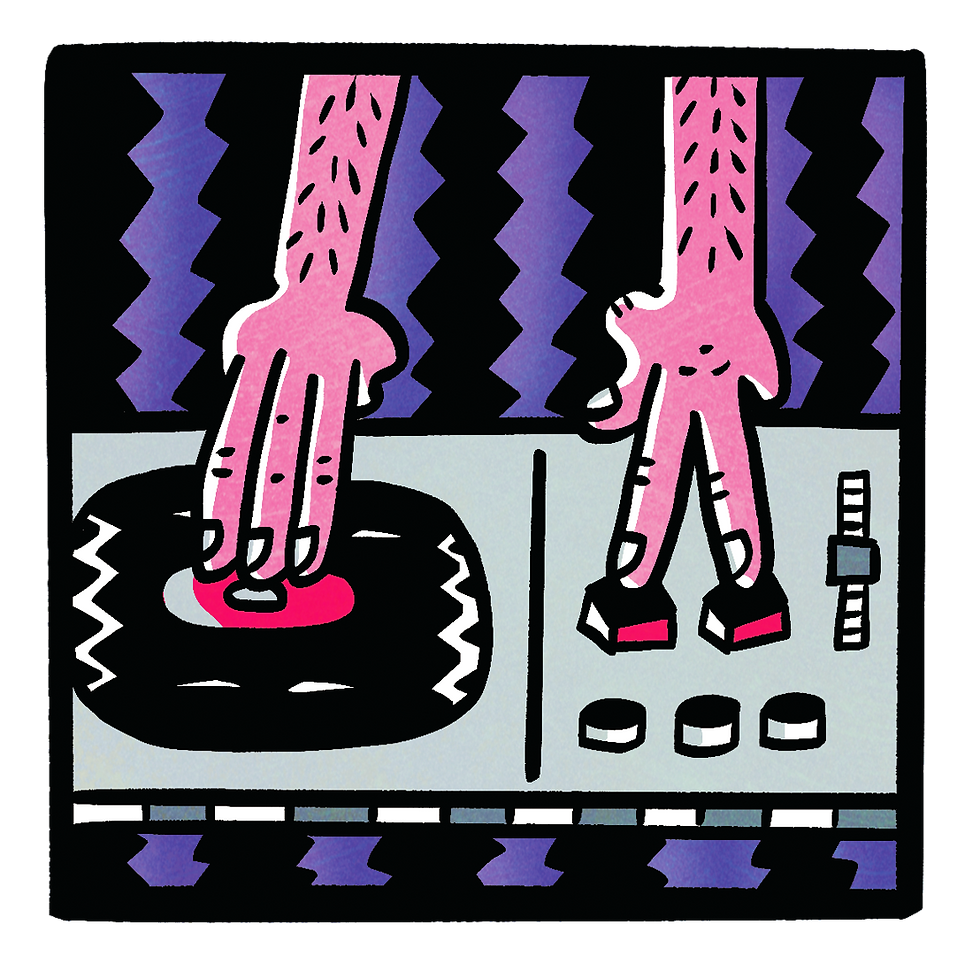
“Can I speak to you privately for a moment? / I just want to explain”. So begins Charli xcx’s ninth studio album, in a huskily-voiced spoken-word piece by John Cale (The Velvet Underground). But that opening track, ‘House’, with its creep and crescendo, its screams and distortions, is about as dark as Wuthering Heights gets.
Though it’s been conceived of as a companion piece to the new Emerald Fennell film, and though some of its material is used there, Charli’s new album is not exactly a soundtrack. Nor is it explicitly narrative, relaying the doomed romance and reckoning of Emily Brontë’s original 1847 novel.
Instead, the record seems to use Wuthering Heights as a premise, one that allows the artist to turn away from the sound of her 2024 breakout brat. On it, she finds reprieve in a lush, techo-gothic soundscape, replete with real string players (!), crafted alongside frequent collaborator Finn Keane, himself rebranded (he previously went by EasyFun) as a real-deal, first-name-last-name producer.
brat was undeniably massive—and not just by Charli’s standards, who’d been making waves (and the occasional critical splash) as a sly pop-auteur since at least as early as 2017. brat was an iconic kind of massive; a merch-making, profile pic-changing, feud-resolving, era-defining kind of massive. And then it steamrolled into a remix album whose list of features read like the contents page of a future history of 21st-century music. And then, just when you thought it was over, it found one final hit in Charli's much-overlooked pandemic album how i'm feeling now: the yearning ‘party 4 u’.
But like anything so popular that even the Hallenstein's boys were frat-flicking to it at Laneway, there was always the risk that brat’s nervous, twitchy take on dance music—a take that, mind you, was deeply rooted in the UK’s queer and experimental scenes in the early ‘10s—would curdle into something uncool. It makes sense that Charli’s turned away from the brat-green limelight to seek something different on Wuthering Heights. So what about that “techno-gothic soundscape”? Well, it’s a soundscape that has, by comparison to the first impression that ‘House’ gives us, surprising moments of beauty, ease, and levity.
Take ‘Chains of Love’, one of the lead singles, for example, which recalls for me the chordal, anthemic sound of her 2013 debut True Romance—just as the loopy, rhythmic chorus on ‘Dying for You’ brings to mind deep cuts like ‘detonate’ from the aforementioned how i’m feeling now.
Or take ‘Altars’, which might just be the finest thing on here, and its riff on a line of Harry Nilsson's: “One is the loneliest number that you’ll ever do”. His is a song of despair after a breakup. But Charli’s take? “One is not the loneliest number / Won’t keep putting all my faith in you”. Charli hopes we’ll hear the tragic implication of these lines—when your boyfriend makes you feel like your “mind is torturing [your] body”, as she tells us elsewhere in the song, one really isn't the loneliest number: it's two.
I don’t mean to over-egg it here, but this is both incredible and incredibly simple phrasemaking. Charli's never been a verse-chorus-bridge kind of songwriter, but her lyrics do have that light, aphoristic touch—more Robyn than Nilsson, thankfully—of someone who can distil experience into a tiny string of words.
Tiny is the operative word, though: all of the album’s twelve tracks clock in at the two- or three-minute mark for a total runtime of thirty-four minutes. It is, if you’ll permit me the indulgence, a ‘suite’ of ‘miniatures’. If you won’t permit me the indulgence, the album might feel like a bit of a genre exercise; just too light for an artist of this calibre. But then there’s a flourish from those gorgeous strings, double-stopping and sliding through the sparky electronics. If it’s a gimmick, it’s at least got the guts to be convincing through its admittedly-short duration.
As I hope is obvious, the tortured love songs on this record have as much to do with doubt, distance, and desire in the abstract as they do with the Wuthering Heights of either Bronte’s or Fennell’s conception. And, likewise, the framing of the album as a movie tie-in doubles as the cover under which Charli makes her escape from such a massive album as brat. Wuthering Heights is something of a statement for Charli—a statement about who she was, where she’s at, and where she’s headed. Yet the record’s brilliance (and this has always been Charli’s brilliance) is that it comes off as understated; effortless.
This is Your Legacy
Mārama brings Māori gothic to the big screen
Minor spoilers ahead.
All the usual gothic markers are there: a lone woman in a strange place; sudden visions of violence; disembodied sounds and voices; false reflections in mirrors; rooms one mustn't enter; heavy footsteps at night—there’s even a gorgeous red gown, tensed for wear in a big finale. We know something’s up, we just don’t know exactly what.
Like any thriller worth the price of its ticket, writer-director Taratoa Stappard’s Mārama clocks in at a tight ninety minutes, knowingly riffing all the while on these familiar tropes and cliches. What might be less expected, however, is the Aotearoa flavour his film brings to the genre. The orphaned Mārama “Mary” Stevens (Ariāna Osborne) arrives in Yorkshire in 1859 to learn about her whakapapa. But after a boat journey of seventy-two days, the man who initially summoned her has died. Welcoming her in his place is the charming Nathanial Cole (Toby Stevens), who kindly invites her to stay in his manor.
What follows is a genuinely thrilling albeit usual procedure as Mārama’s visions become more and more intense; as she, alongside us viewers, slowly pieces together the cruelty her tūpuna suffered at the hands of their colonists. Horror as a genre often works best when its gory theatrics keep us occupied with gasping and tensing—meanwhile its creators subtly raise the action from the literal to the figurative register. Just notice how, during a pivotal scene in which Mārama confronts Cole, the latter replies, “This is your legacy.” It’s a chilly line, devastatingly true, that resonates both with her character’s history and Aotearoa’s. history at large. We can’t erase the past—but just how do we deal with the violent legacy we have all inherited on colonised land? (As an aside, Mārama certainly has its Get Out moments, too, as Cole’s mansion, adorned with stolen taonga, displays his out-of-touch, culturally-insensitive ‘respect’ for our heroine’s people.)
Thus, a conflict of ideas plays out through the instantiation of character, and vice versa: as we’re absorbed in character and plot, squealing and flinching at the moment-by-moment action, this dark, gothic period drama is thinking out larger ideas. It’s an unbeatable formula, because it has its cake and eats it, too—and it’s a special pleasure to see it in action so close to home. But I’d be remiss here not to mention David Ballantyne’s unbelievable, extraordinary, somehow-forgotten 1968 novel, Sydney Bridge Upside Down, which is, to my mind, something of a tupuna to any artwork operating in the genre of Māori gothic.
That novel is full of powerful moments of indeterminacy and doubt. What’s different about Mārama, then, is its surefire confidence. Ariāna Osborne is pitch-perfect in the lead role: at first shocked, then cold, then humiliated—then, finally, furious. But the film is not mere revenge fantasy; it’s a channeling of outrage, an outrage rooted in the real historical horrors its narrative is drawn from. And Mārama’s moral is a simple one: colonisers cannot be redeemed, only disposed of.